

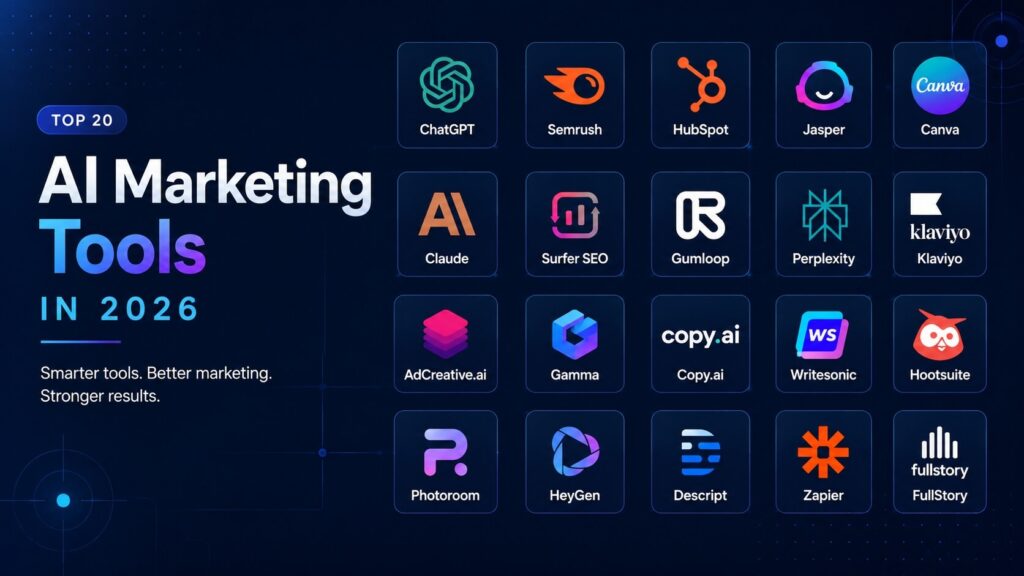
AI marketing tools are software products that use machine learning or generative AI to plan, produce, optimize, or analyze marketing work.Spanning three distinct categories: standalone point tools (Jasper, Copy.ai, Surfer), AI features built into existing platforms (Klaviyo’s Marketing Agent, Canva’s Magic Studio), and full-suite agentic systems that execute multi-step campaigns with limited human input.
Adoption is no longer the open question: according to HubSpot’s 2026 State of Marketing research, 86.4% of marketing teams now use AI in at least a few workflows, up sharply from 67% a year earlier. What actually matters in 2026 is which category of tool fits your team, what it really costs once usage-based fees are added, and whether your process is mature enough to get value from it.
This guide differs from the standard “top 15 AI marketing tools” listicle in three ways: models total cost of ownership instead of sticker price, and it reports where these tools fail not just what they promise.
Quick-Answer Summary: Top Pick by Use Case
|
Tool |
Best for |
AI Marketing Use |
Free Tier |
Paid Starting Cost |
|
ChatGPT |
All-round marketing |
Strategy, research, copy, analysis, ideation, content, campaigns |
Yes |
$20 / month (Plus) |
|
Semrush |
SEO + GEO |
SEO research, competitor analysis, content, AI visibility |
Yes (Free account with 10 requests/day) |
$139.95 / month (Pro) |
|
HubSpot |
Full-stack marketing |
CRM + AI content + automation + lead nurturing |
Yes (Free CRM & basic tools) |
$20 / seat/month (Starter Hubs) |
|
Jasper |
Marketing content |
Brand-aware content and campaign production |
No (7-day free trial only) |
$59 / month (billed annually) or $69/mo |
|
Canva |
Creative production |
AI images, design, presentations, social creatives, video |
Yes |
$15 / month or $120 / year (Pro) |
|
Claude |
Strategy + content |
Research, long-form content, analysis, campaign planning |
Yes |
$20 / month (Pro) |
|
Surfer SEO |
AI SEO |
Content optimization, SERP analysis, topical coverage |
No (7-day paid/trial options) |
$49 / month (Essential) |
|
Gumloop |
AI Automation |
AI agent workflows & data pipelines |
Yes |
$37 / month |
|
Perplexity |
Marketing research |
Market research, competitor research, source-backed research |
Yes |
$20 / month (Pro) |
|
Klaviyo |
E-commerce marketing |
AI email/SMS personalization and customer segmentation |
Yes (Up to 250 contacts / 500 emails) |
$20 / month (scales by list size) |
|
Paid ads |
AI ad creatives, variations and performance-oriented creative |
No (7-day free trial only) |
$39 / month (Starter) |
|
|
Gamma |
Pitch decks & client proposals |
Instant interactive slide decks, webpage presentations, and proposal layouts. |
Yes (400 starting AI credits) |
$10 / month (Plus) |
|
Marketing workflows |
AI-powered content and GTM workflows |
Yes (2,000 words/mo in chat) |
$49 / month (Pro) |
|
|
Writesonic |
SEO/content |
AI articles, SEO content and AI search visibility |
Yes (Free trial credits) |
$16 / month (Individual) |
|
Hootsuite |
Social media |
AI-assisted social content, scheduling and analytics |
No (30-day free trial only) |
$99 / month (Professional) |
|
Photoroom |
E-commerce product photography |
Instant AI background replacement, lighting adjustments, and batch editing. |
Yes |
$7.99 /month (Pro) |
|
HeyGen |
Video marketing |
AI avatars, marketing videos, localization |
Yes (1 free credit/month) |
$29 / month (Creator) |
|
Descript |
Video/content repurposing |
AI editing, transcription, clips and repurposing |
Yes (1 hr transcription/month) |
$19 / user/month (Creator) |
|
Zapier |
Marketing automation |
Connect AI agents/tools to automate workflows |
Yes (100 tasks/month) |
$29.99 / month (Starter) |
|
FullStory |
CRO/customer behavior |
AI-assisted behavioral analytics and UX insights |
No (14-day free trial only) |
Custom / Quote-based (Business tiers) |
Read Also: AI Marketing Trends
ChatGPT (All-round marketing)
ChatGPT is the generalist of the AI marketing toolkit, a conversational assistant built on OpenAI’s GPT models that can write, brainstorm, analyze, and adapt to almost any tone or format you throw at it. It’s usually the first stop for marketers because it doesn’t specialize in one channel; it flexes across all of them.

Marketing use cases:
- Drafting blog posts, email campaigns, and ad copy at speed
- Brainstorming campaign angles, taglines, and content calendars
- Repurposing one piece of content into multiple formats (LinkedIn post → tweet thread → email)
- Writing product descriptions and landing page copy
- Customer persona development and messaging frameworks
- Quick market research summaries and competitor positioning ideas
Where it fails:
- No native access to real-time data or your actual analytics/CRM unless connected via plugins or API. It can’t tell you how your last campaign actually performed
- Generic output by default, copy often needs heavy editing to sound on-brand rather than “AI-flavored”
- No built-in design, image, or video production suited for polished marketing assets
- Struggles with long-term campaign memory across sessions unless you manage context manually
Semrush (SEO/GEO & Competitive Research)
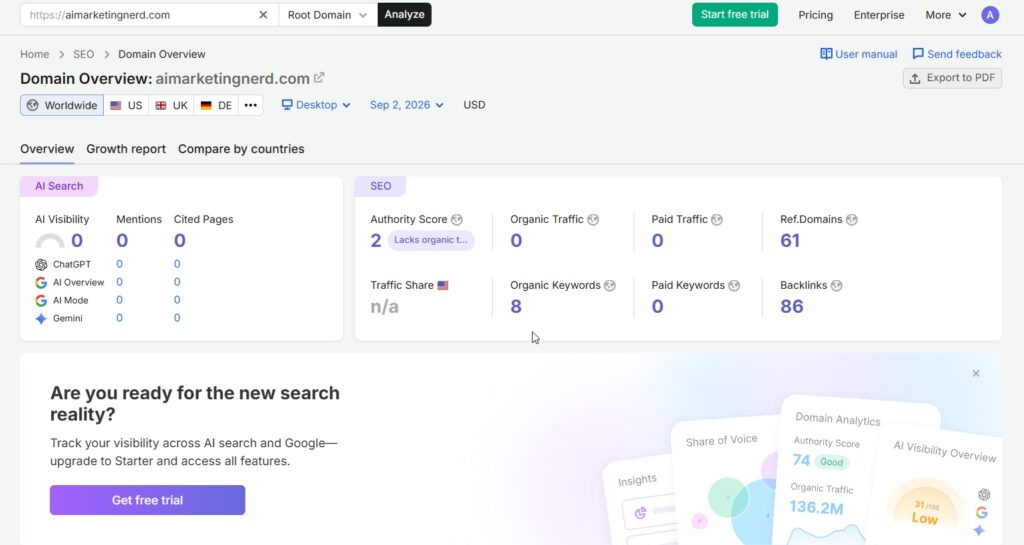
Semrush is a heavyweight SEO and digital marketing platform built around keyword research, site audits, and competitor intelligence. Where ChatGPT generates ideas, Semrush tells you what’s actually happening in search and what your competitors are doing about it.
Marketing use cases:
- Keyword research and search volume/difficulty analysis
- Competitor traffic, keyword, and backlink analysis
- Site audits for technical SEO issues (broken links, crawl errors, page speed)
- Rank tracking across search engines and locations
- Content gap analysis — finding topics competitors rank for that you don’t
Where it fails:
- Steep learning curve with too many tools/reports for new users
- Expensive for small businesses or solo marketers
- Keyword and traffic data are estimates, not exact figures
- Doesn’t write or create content itself, informs strategy, doesn’t execute it
Got it — my mistake. Here’s the corrected format with plain bullets:
HubSpot (All-in-One Marketing & CRM)
HubSpot combines CRM, email marketing, automation, and content tools into one platform, making it a favorite for teams that want marketing, sales, and customer data connected in one place.
Marketing use cases:
- Email marketing and automated nurture workflows
- CRM for tracking leads and customer interactions
- Landing page and website building with built-in analytics
- Marketing automation and lead scoring
- Reporting dashboards that tie campaigns to revenue
Where it fails:
- Pricing scales up quickly as you add contacts and features
- Advanced automation and reporting are locked behind higher tiers
- Can feel bloated if you only need one or two features
- Customization requires a learning curve for complex workflows
Jasper (AI Content & Brand Voice)
Jasper is an AI writing tool built specifically for marketing teams, with a focus on maintaining brand voice consistency across large volumes of content.
Marketing use cases:
- Long form blog and article generation
- Ad copy and social media captions at scale
- Brand voice training for consistent tone across writers
- Campaign content generation across multiple formats
- Team collaboration on content with shared templates
Where it fails:
- Pricier than general tools like ChatGPT for similar output
- Still needs human editing for accuracy and originality
- Brand voice setup takes time to calibrate properly
- Limited strategic or research capability compared to SEO tools
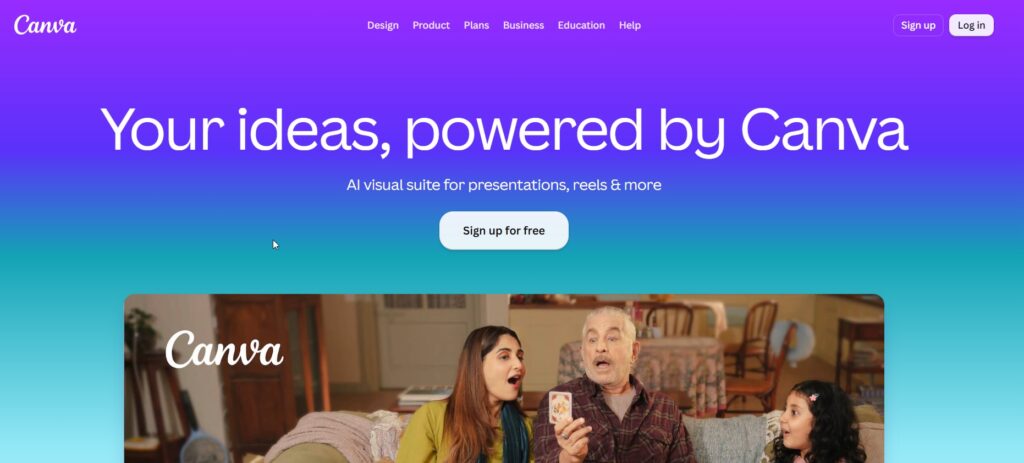
Canva (Design & Visual Content)
Canva is a drag and drop design platform that lets marketers create visual assets without needing a dedicated designer or advanced design skills.
Marketing use cases:
- Social media graphics and post templates
- Presentation decks and pitch materials
- Basic video editing and short form content
- Branded templates for consistent visual identity
- Print materials like flyers, banners, and business cards
Where it fails:
- Limited for complex or highly custom design work
- Templates can look generic if overused across brands
- Advanced features like animation are basic compared to pro tools
- File export options can be limiting for professional print work
Claude (AI Writing & Reasoning)
Claude is an AI assistant known for strong reasoning, longer context handling, and nuanced writing, often used for more thoughtful or complex marketing content.
Marketing use cases:
- Long form content requiring nuance and structure
- Strategic brainstorming and campaign planning
- Editing and refining existing drafts for clarity and tone
- Summarizing research or long documents into marketing insights
- Drafting thoughtful customer communications and messaging
Where it fails:
- No native real time data or analytics access
- No built in design or visual content creation
- Requires clear prompting to avoid generic output
- Not specialized for channel specific SEO or ad optimization
- Can still make factual errors without verification
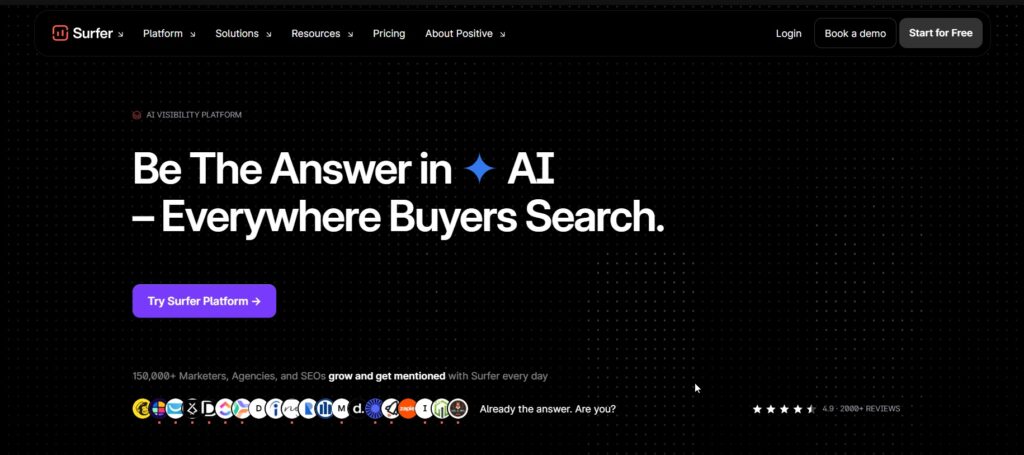
Surfer SEO (Content Optimization)
Surfer SEO focuses specifically on optimizing content to rank higher in search, using data driven recommendations based on top performing pages.
Marketing use cases:
- On page SEO optimization for existing content
- Content briefs based on top ranking competitor pages
- Keyword density and structure recommendations
- Content audits to identify underperforming pages
- Integration with AI writing tools for optimized drafts
Where it fails:
- Can encourage over optimization that hurts natural readability
- Recommendations are data based, not always creatively sound
- Limited outside of on page SEO, no broader strategy tools
- Requires pairing with a writing tool since it does not generate content itself
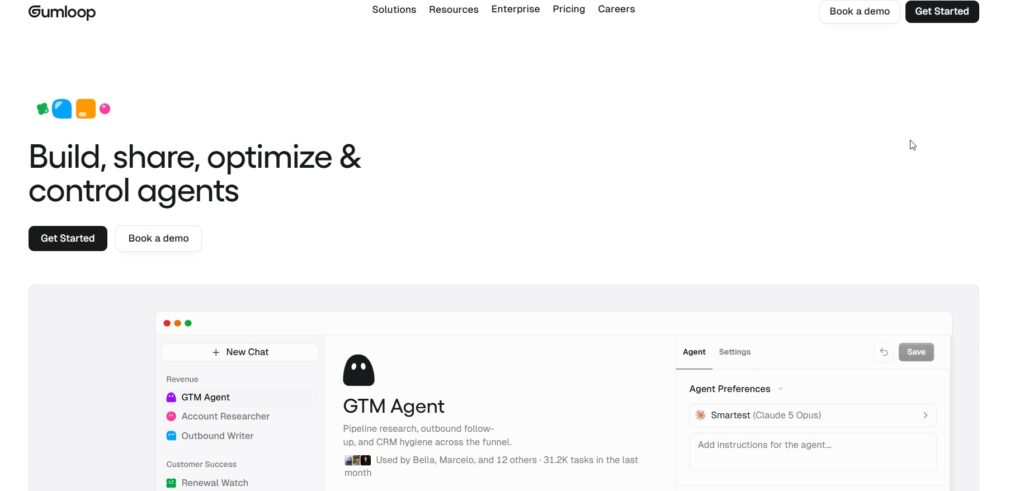
Gumloop (AI Workflow Automation)
Gumloop is a no code platform for building AI powered automations, letting marketers chain together AI tasks and data sources without writing scripts.
Marketing use cases:
- Automating repetitive content or data workflows
- Scraping and organizing competitor or market data
- Building custom AI pipelines for content generation
- Connecting multiple tools and data sources into one flow
- Automating reporting and data enrichment tasks
Where it fails:
- Steep learning curve for non technical marketers
- Requires setup time before workflows run smoothly
- Limited templates compared to more established automation tools
- Can break if connected APIs or data sources change
- Smaller community and support base than competitors like Zapier
Read Also: What is AI Marketing
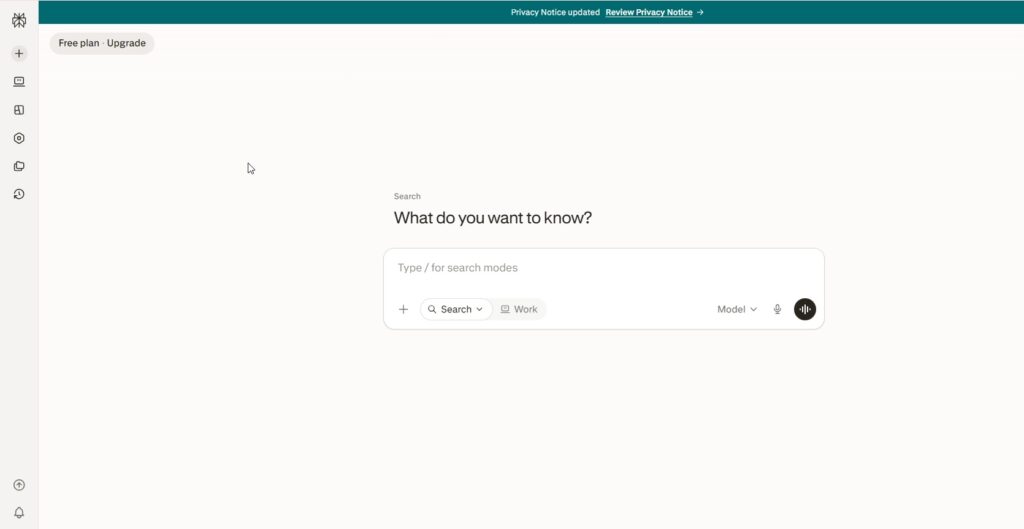
Perplexity (AI Research & Search)
Perplexity is an AI powered answer engine that pulls from real time web sources, making it useful for research backed by citations rather than pure generation.
Marketing use cases:
- Quick market and competitor research with sources
- Fact checking claims before publishing content
- Trend spotting and industry news summaries
- Gathering data points for reports or campaigns
- Finding credible sources to back up content claims
Where it fails:
- Not built for long form content creation
- Source quality can vary and needs manual verification
- Limited creative or brainstorming capability compared to ChatGPT or Claude
- No content calendar, campaign, or design tools
- Can misinterpret nuanced or ambiguous research queries
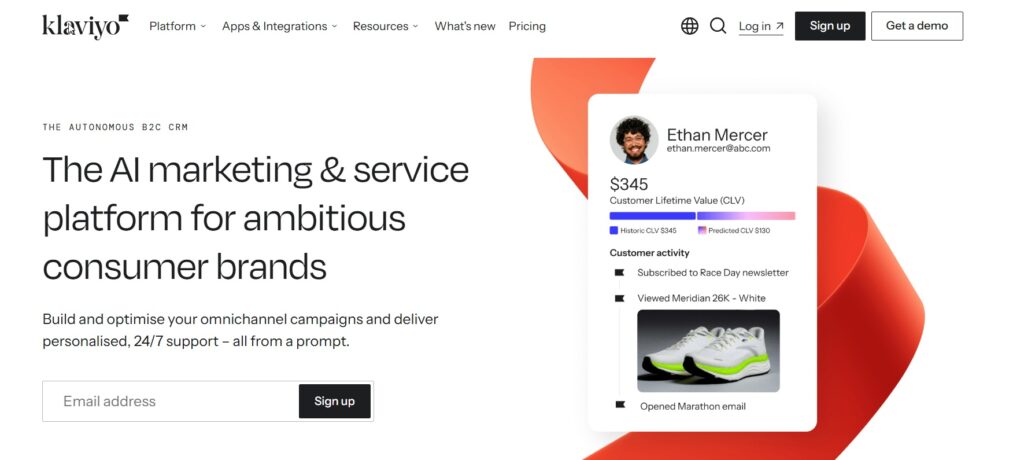
Klaviyo (Email & SMS Marketing)
Klaviyo is an ecommerce focused marketing platform built around email and SMS automation, deeply integrated with customer data and purchase behavior.
Marketing use cases:
- Automated email and SMS flows based on customer behavior
- Segmentation using purchase history and browsing data
- Abandoned cart and post purchase automation
- A/B testing campaigns for optimization
- Revenue attribution tied directly to campaigns
Where it fails:
- Best suited for ecommerce, less useful for other industries
- Pricing rises quickly with contact list size
- Interface can overwhelm users new to automation
- Deliverability issues need active monitoring and management
- Advanced segmentation requires clean, well structured data
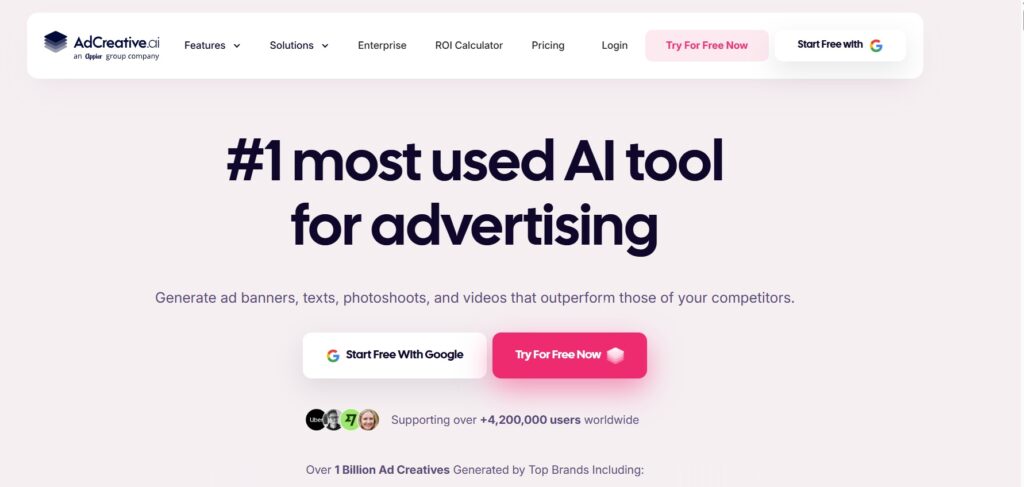
AdCreative.ai (AI Ad Creative Generation)
AdCreative.ai generates ad creatives and banners using AI, aimed at speeding up the production of paid ad visuals and copy variations.
Marketing use cases:
- Generating multiple ad creative variations quickly
- Creating banner ads for different platforms and sizes
- Producing ad copy alongside visuals
- Testing creative performance predictions before launch
- Scaling ad production for performance marketing teams
Where it fails:
- Designs can look templated or generic without customization
- Limited creative control compared to manual design tools
- Performance predictions are estimates, not guarantees
- Best for standard ad formats, weak for unique brand concepts
- Still needs human review for brand consistency
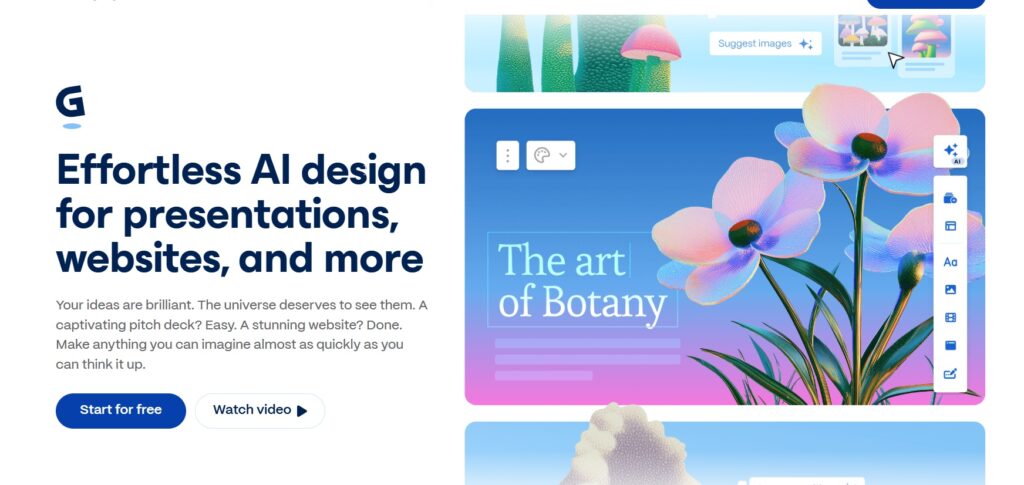
Gamma (AI Presentation & Document Design)
Gamma is an AI tool for creating presentations, documents, and webpages quickly, turning prompts or outlines into designed visual formats.
Marketing use cases:
- Building pitch decks and campaign presentations fast
- Turning reports or research into visual documents
- Creating simple webpages or one pagers
- Repurposing written content into visual formats
- Quick internal or client facing presentation drafts
Where it fails:
- Design customization is limited compared to tools like Canva
- Templates can feel repetitive with heavy use
- Less control over precise layout and branding details
- Not suited for complex multi page design projects
- Export options can be restrictive for advanced formatting needs
Copy.ai (Go-To-Market (GTM) platform)
It is an AI-powered Go-To-Market (GTM) platform built to automate and scale operations for marketing, sales, and revenue operations (RevOps) teams.
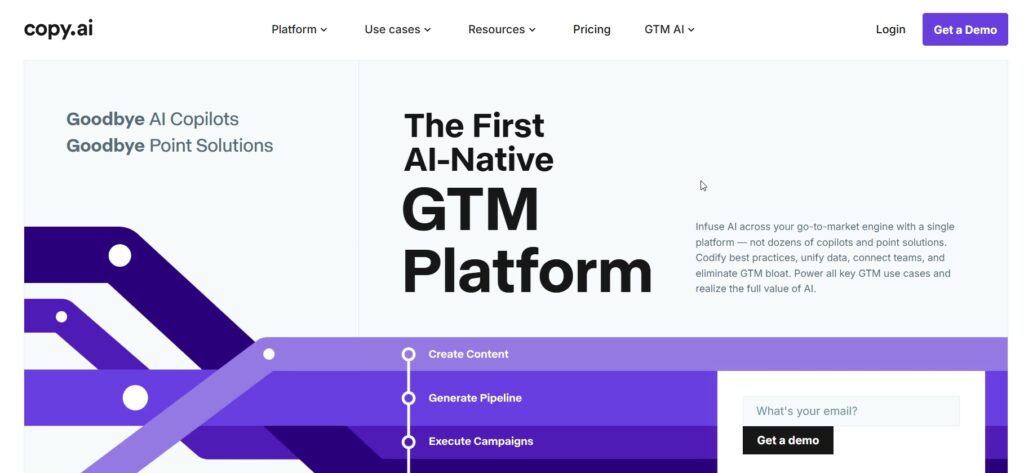
While it originally started as an AI copywriting and content generation tool, it has evolved into a comprehensive platform designed to replace scattered point solutions and single-purpose AI “copilots” with a unified workflow engine.
Marketing use cases
- Content creation & repurposing — blogs, social posts, thought leadership, etc.
- SEO — keyword research, briefs, content generation, optimization & refreshing.
- Email & outbound marketing — campaigns, nurture sequences, personalized outreach.
- Paid advertising — ad copy, variations and campaign assets.
- GTM/marketing automation — automate repeatable workflows across CRM, sales and marketing tools.
Where It Fails
- Marketing strategy — doesn’t replace positioning, market strategy or strategic thinking.
- Deep customer understanding — can’t replace customer interviews and firsthand insights.
- Original creativity — tends toward competent variations rather than breakthrough ideas.
- Accuracy & judgment — research, facts, competitor insights and claims require human verification.
- Performance isn’t guaranteed — generating more content/ads doesn’t necessarily produce better rankings, conversions or revenue.
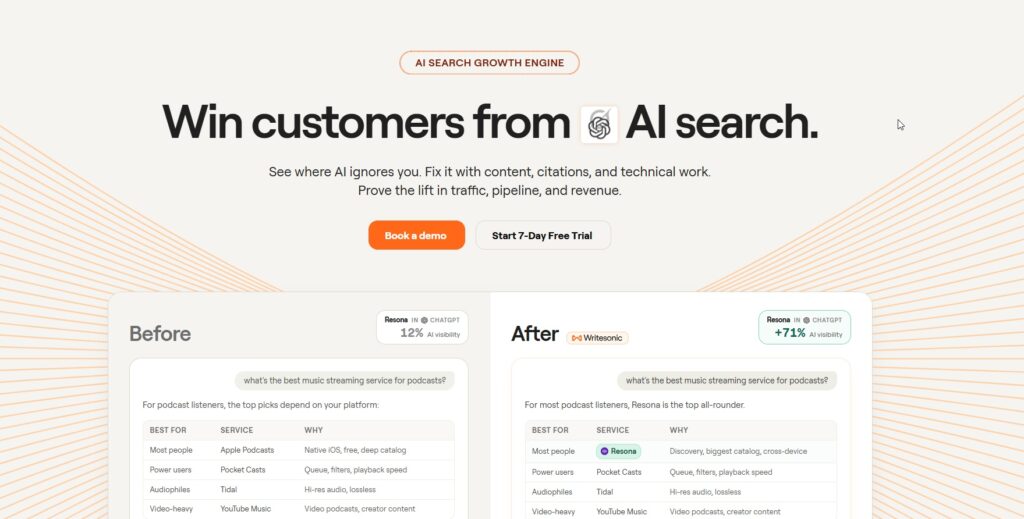
Writesonic (AI Content & SEO Writing)
Writesonic combines AI writing with SEO tools, aimed at producing search optimized content alongside general marketing copy.
Marketing use cases:
- SEO optimized blog and article writing
- Landing page and ad copy generation
- AI article writer with built in fact checking features
- Product descriptions and marketing email drafts
- Content repurposing across formats
Where it fails:
- SEO features are less robust than dedicated tools like Surfer or Semrush
- Output quality can be inconsistent across content types
- Requires editing to match specific brand tone
- Can feel like it overlaps with too many other tools without a clear edge
- Fact checking still needs human verification
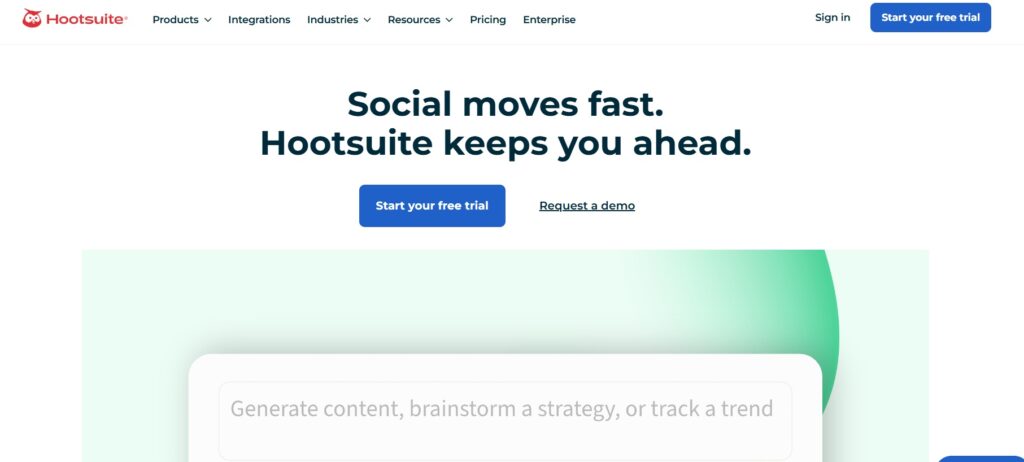
Hootsuite (Social Media Management)
Hootsuite is a social media scheduling and management platform that lets marketing teams plan, publish, and analyze content across multiple platforms.
Marketing use cases:
- Scheduling and publishing posts across social platforms
- Social media analytics and performance tracking
- Managing multiple accounts and team collaboration
- Social listening for brand mentions and trends
- Content calendar planning across channels
Where it fails:
- Pricing gets expensive with more social profiles or seats
- Interface can feel dated compared to newer competitors
- Analytics depth is limited without higher tier plans
- Occasional delays or bugs in scheduled post publishing
- Doesn’t generate content itself, only manages distribution
Photoroom (AI Image Editing)
Photoroom is an AI powered photo editing tool focused on background removal and product photo enhancement, popular for ecommerce visuals.

Marketing use cases:
- Removing and replacing backgrounds for product photos
- Creating clean product images for listings and ads
- Batch editing images for catalogs
- Generating quick mockups for marketing visuals
- Enhancing photo quality for social media posts
Where it fails:
- Limited beyond product and photo focused editing
- Not suited for complex graphic design work
- Free tier has restrictions on export quality and features
- Background removal can struggle with complex or busy images
- No video or motion design capability
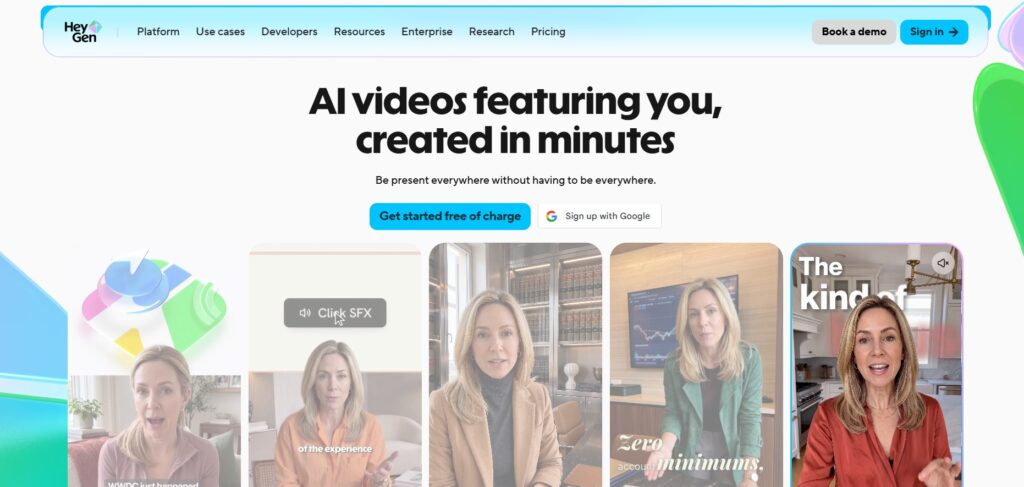
HeyGen (AI Video & Avatar Generation)
HeyGen creates AI generated videos using digital avatars and voice cloning, letting marketers produce video content without cameras or actors.
Marketing use cases:
- Creating explainer or product videos with AI avatars
- Localizing video content into multiple languages
- Producing personalized video messages at scale
- Quick social media or ad video creation
- Training or onboarding videos for internal use
Where it fails:
- Avatars can still look noticeably artificial in some cases
- Limited emotional range and natural expression compared to real actors
- Voice cloning quality varies by language and accent
- Ethical and trust concerns around AI generated people
- Customization of avatars and scenes has limits
Descript (AI Video & Audio Editing)
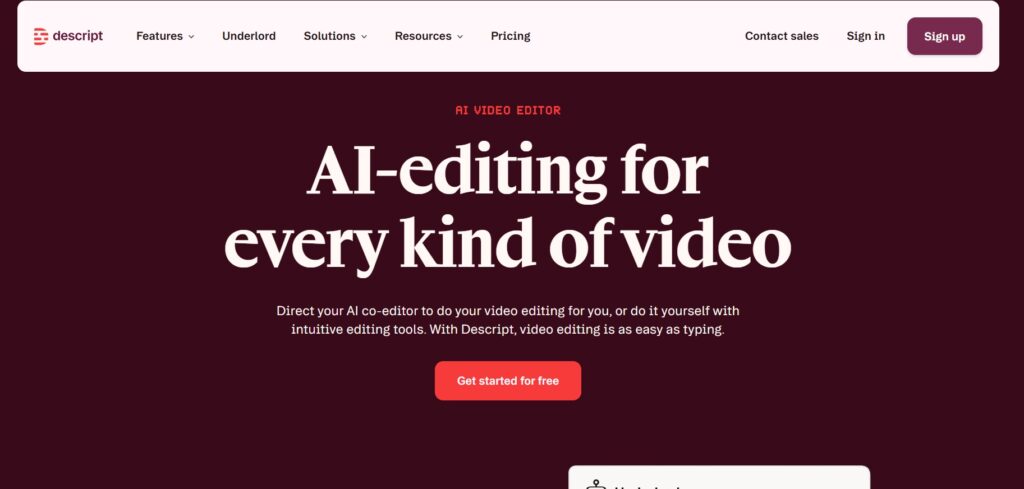
Descript is an editing tool that lets you edit video and audio by editing text, making it accessible for marketers without traditional editing skills.
Marketing use cases:
- Editing podcast and video content via transcript editing
- Removing filler words and cleaning up audio automatically
- Creating short clips from longer video content
- Adding captions and subtitles quickly
- Voice cloning for corrections without re-recording
Where it fails:
- Less powerful than dedicated tools for advanced video effects
- Can struggle with complex multi layer video projects
- Transcription accuracy varies with audio quality
- Rendering and export times can be slow for longer content
- Learning curve for users unfamiliar with text based editing
Zapier (Workflow Automation)
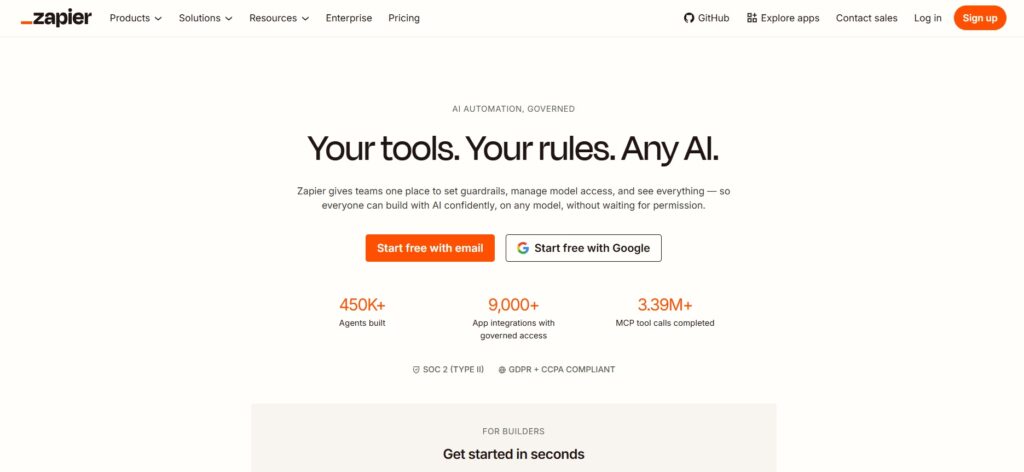
Zapier connects different apps and tools together, automating tasks between platforms without needing custom code.
Marketing use cases:
- Automating lead capture from forms into CRM systems
- Syncing data between marketing tools and spreadsheets
- Triggering email or notification workflows automatically
- Connecting social media, ad platforms, and analytics tools
- Automating reporting and data collection tasks
Where it fails:
- Costs scale quickly with more zaps and higher usage
- Complex workflows can become difficult to manage and debug
- Occasional delays in trigger and action execution
- Limited logic capabilities compared to dedicated automation platforms
- Relies on third party app integrations staying stable and updated
FullStory (Behavioral Analytics)
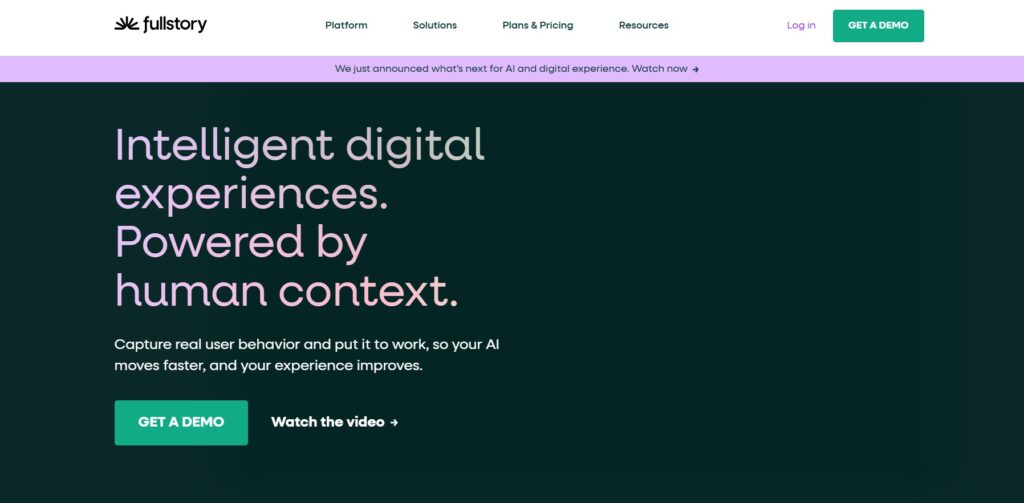
FullStory captures and analyzes user behavior on websites and apps, helping marketing teams understand how visitors actually interact with digital experiences.
Marketing use cases:
- Session replay to see real user behavior on site
- Identifying friction points in conversion funnels
- Heatmaps showing where users click and scroll
- Analyzing user journeys to improve UX and campaigns
- Debugging issues affecting conversion or engagement
Where it fails:
- Can be expensive for smaller businesses or lower traffic sites
- Requires proper setup and tagging to capture accurate data
- Data volume can be overwhelming without clear analysis goals
- Privacy and compliance considerations need careful handling
- Doesn’t provide marketing execution tools, only insight