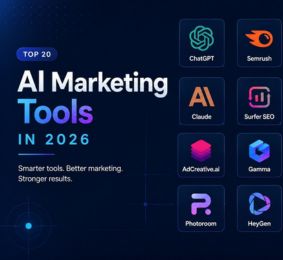


If you Googled “AI marketing trends” last year, you probably got a list of tools to try. This year, the story is different. Adoption is no longer the question currently nearly 9 in 10 marketers already use AI somewhere in their workflow.
The real story of 2026 is what happens after everyone adopts the same technology: a widening gap between brands that use AI as invisible infrastructure and brands that get publicly burned for leaning on it too visibly.
This piece breaks down where AI marketing actually stands in 2026 not the hype version, but the version backed by fresh data, real campaigns, and a few expensive mistakes other brands already made so you don’t have to. If you’re trying to understand the future of marketing and where to actually put your time and budget, this is the practical version.
What’s Changed Since Last Year
A year ago, the conversation was about experimentation like testing a chatbot here, drafting some ad copy there. Now that phase is over. Three shifts define where things stand now:
Search itself has fractured. Google’s AI Overviews, plus a wave of answer engines like ChatGPT, Perplexity, and Gemini, are increasingly answering questions directly instead of sending people to websites.
Some analyses put the organic traffic hit from AI Overviews as high as 18-47% for certain query types. That’s forced a shift from ranking for clicks to earning citations inside AI-generated answers — a discipline people are now calling Answer Engine Optimization (AEO).
AI moved from a tool to an operating model. Generative AI used to mean “help me write this email faster.” Agentic AI means software that plans, executes, and adjusts a campaign with much less human input at each step such as audience discovery, budget shifts, and creative testing happening in a loop rather than a series of manual tasks.
The audience started pushing back. This is the part most trend lists skip. A June 2026 Harris Poll conducted with the 4As and Infillion found that a large majority of consumers say AI-generated ads feel less authentic, and a meaningful share say they’re less likely to trust or buy from a brand once they suspect AI made the ad. Brands that treated AI as a badge of innovation in 2025 spent a chunk of 2026 walking that positioning back.
How We Analyzed These Trends
Rather than guessing at what might matter, this list is built from three sources triangulated against each other: enterprise research from firms like Gartner and McKinsey, martech adoption data from industry trackers (Brinker’s martech research, HubSpot’s State of Marketing).
The public record of what actually happened when brands deployed AI in the real world, wins and failures both. A trend only made the cut if it showed up in the data and had a visible real-world consequence, good or bad.
10 AI Marketing Trends Shaping 2026
1. Agentic AI Is Running Full Campaigns, Not Just Tasks
Instead of asking AI to write one ad, marketers are handing agents an outcome like “grow qualified leads in this segment” and letting the system plan and adjust the campaign itself. Roughly 9 in 10 marketing orgs already use AI agents somewhere in their stack, though most are still limited to narrow tasks like content production rather than full orchestration.
Example: An AI agent identifies underperforming Google Ads, changes bids/budgets, generates new ad variations and reports the results.
2. Answer Engine Optimization Is a Real Discipline Now, Not a Buzzword
With zero-click search spreading across ChatGPT, Perplexity, Gemini, and even Meta AI, being the cited source inside an AI answer matters as much as ranking on page one. This means structured data, clear factual claims, and content built to be extracted, not just read.
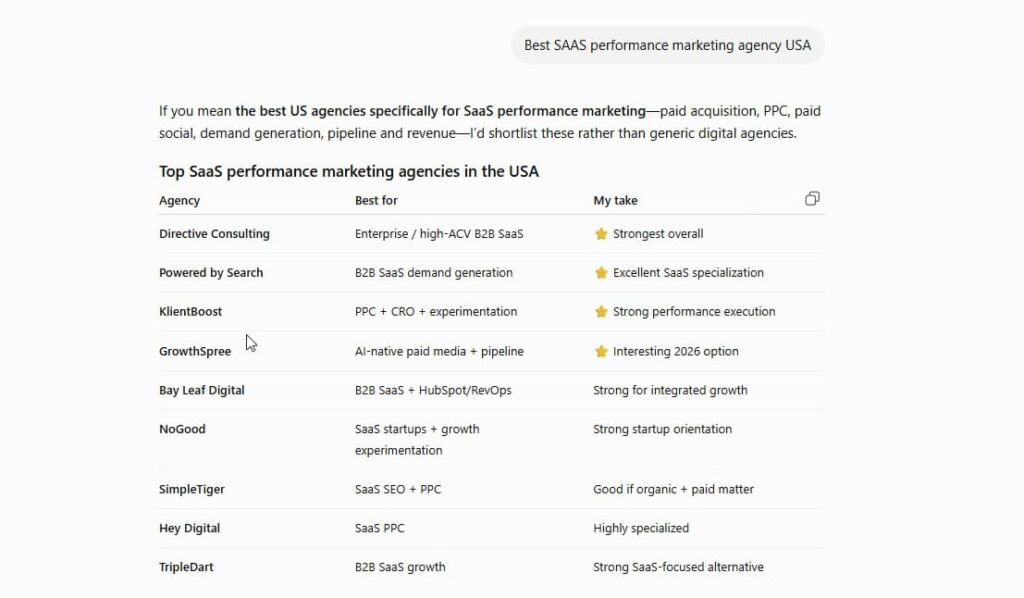
Example: A marketing company wants ChatGPT or Google’s AI search to mention its product when users ask, “Best SAAS performance marketing agency in USA?”
3. Machine Customers Are Entering the Funnel
AI shopping agents that research, compare, and even complete purchases on a person’s behalf are no longer science fiction forecasts suggest they could account for a real slice of total revenue within a couple of years. Marketing to an algorithm that evaluates your pricing page requires different signals than marketing to a human.
4. Ads Are Showing up Inside AI Chat Interfaces
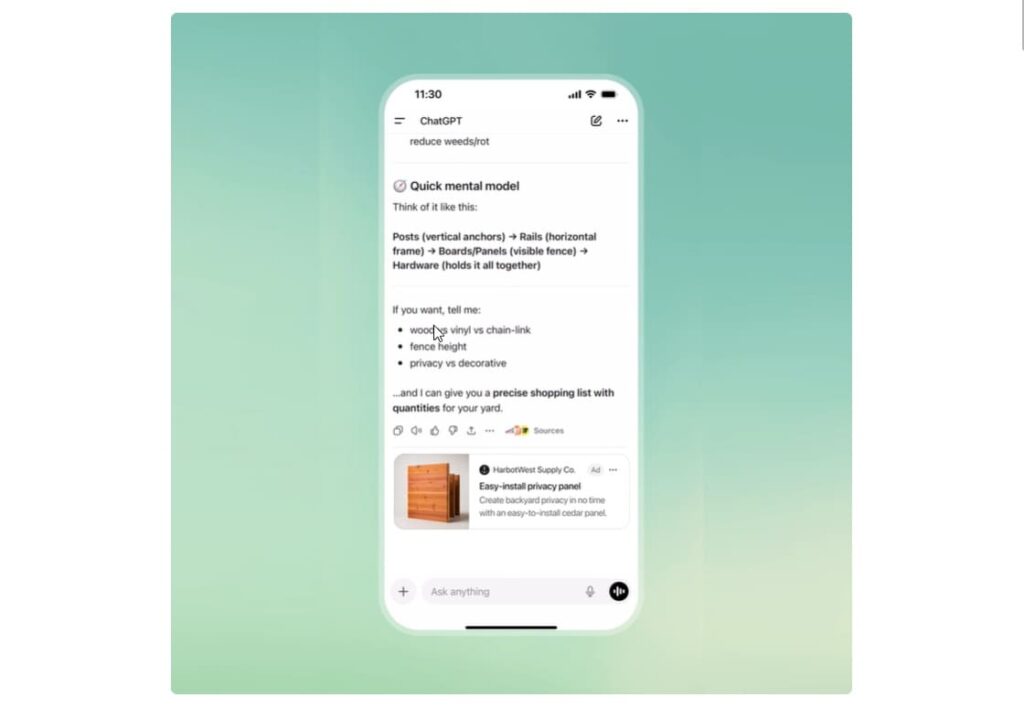
OpenAI’s rollout of advertising inside ChatGPT was a turning point. It forces a new distinction between an organic AI recommendation and a paid one, and puts marketing on the hook for maintaining trust in that distinction.
5. Hyper-Personalization with AI
AI enables marketers to personalize experiences at a much deeper level than traditional audience segmentation. Instead of showing the same campaign to an entire audience, AI can adapt messaging based on individual behavior and context.
It can analyze browsing behavior, purchase history, preferences and engagement signals. This can make marketing more relevant while reducing wasted impressions.
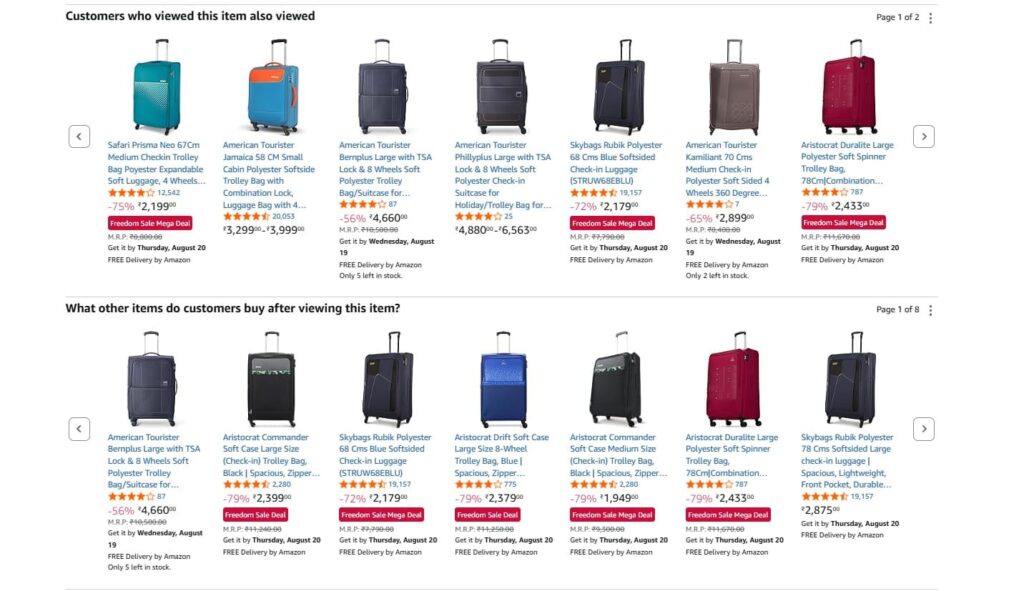
Example: An ecommerce site recommends different products and offers to two visitors based on their previous behavior.
6. “Ai-Free” is Becoming an Actual Brand Position
In a reversal from 2025, several consumer brands have run campaigns explicitly rejecting AI-generated content, betting that craftsmanship and visible human effort now read as a premium rather than a limitation.
7. Creator and Content Authenticity Verification Is Going Mainstream
As AI-generated media floods social feeds, platforms and brands are investing in ways to verify that a creator, review, or piece of content is genuinely human-made, partly for trust, partly to avoid regulatory exposure.
8. Predictive Planning is Replacing Reactive Optimization
Rather than launching a campaign and adjusting it after the fact, AI is increasingly used to model likely outcomes before spend is committed, shifting budget conversations earlier in the process.
8. The Creative Brief is Becoming the Deliverable
Tools like Adobe’s Firefly Assistant let marketers describe an outcome in plain language and have the system orchestrate the actual production. The bottleneck is moving from “who can execute this” to “who can judge whether it’s any good.”
10. AI Governance Has Become a Marketing Responsibility
As AI-mediated interactions become more human-sounding, marketing is the function customers hold accountable when they ask what’s organic, what’s sponsored, and whether the brand’s AI is working for them or against them.
AI Marketing Statistics 2026
- 88% of digital marketers use AI in their day-to-day roles. This shows that AI has moved beyond experimentation and is becoming a regular part of marketers’ workflows.
- 93% of marketers use AI to generate content faster. AI is now deeply embedded in content production, helping marketers increase output while reducing the time required to create content.
- 65% of businesses report improved SEO performance from AI marketing tools. This indicates that AI is being used not only for content generation but also for improving search visibility and SEO workflows.
- AI saves marketers up to 13 hours per week on daily tasks. The productivity benefit is significant, giving marketers more time for strategy, creativity and higher-value activities.
- 92% of businesses intend to invest in generative AI over the next three years. This signals that AI investment is expected to continue accelerating, with businesses moving from experimentation toward broader implementation.
- 87% of marketers use generative AI in at least one recurring content workflow. This shows that generative AI has moved from experimentation into routine marketing operations.
- AI-powered personalization is reportedly improving conversion rates by 202%. The statistic highlights the potential impact of using AI to deliver more relevant messages and experiences based on customer intent and behavior.
- AI-assistant traffic converts at 4.4× the rate of traditional search traffic. This is particularly interesting for GEO/AI Search, suggesting that visitors arriving through AI assistants can be significantly higher-intent.
- AI video-tool usage among marketing teams increased 340% in the last 12 months. This shows how rapidly AI is changing video production, making previously expensive or time-consuming creative work much easier to scale.
- 91% of new marketing roles are projected to require human–AI interaction skills by the end of 2026. The implication is important for marketers: AI literacy, workflow design, prompt skills and AI-output evaluation are becoming part of the marketer’s core skill set—not optional extras
Trend Prioritization Matrix – What to Adopt First
Not every trend deserves your budget this quarter. A simple way to sort them is by plotting two questions: do you have the prerequisites in place (clean data, defined workflows, a team that can supervise AI output), and how urgent is the competitive pressure?
| Low Urgency | High Urgency | |
| You have the Prerequisites | Predictive planning, pod-based restructuring | AEO, agentic execution for well-defined tasks |
| You don’t have the Prerequisites | Machine-customer marketing, in-chat ad strategy | AI governance and authenticity safeguards |
The practical takeaway: if you don’t have clean data and a review process, skip agentic campaign automation for now and start with AEO and governance — both are urgent regardless of your data maturity, and both protect you from the mistakes below.
Common Mistakes to Avoid
The uncomfortable stat behind this trend list: research tied to MIT-adjacent studies has found the large majority of AI marketing initiatives fail to hit their expected outcomes and it’s rarely the technology’s fault. The recurring mistakes:
- Treating automation as strategy. Speeding up execution isn’t the same as making better decisions about what to execute.
- Building instead of buying. In-house AI tooling built without mature vendor infrastructure behind it usually underperforms and drains engineering time.
- Chasing vanity metrics. Faster output and more content volume don’t automatically mean better business outcomes.
- Skipping data cleanup. AI trained on messy, siloed data produces confident, wrong answers.
- Judging results too early. Evaluation windows shorter than 90 days rarely capture whether an AI-driven approach actually worked.
- Letting AI lead emotional or brand-defining decisions. The clearest pattern across 2025-2026’s advertising fails is brands letting a model make a call that needed human judgment about tone, culture, or timing.
Case Studies – Where AI Marketing Worked (and Where It Didn’t)
What worked: Netflix’s AI-generated, personalized thumbnails. They showed different artwork for the same title depending on someone’s viewing history & driven meaningful engagement lifts.
Sephora’s “Beauty OS” combines predictive customer-value modeling with AI-powered try-on tools and has reported a strong bump in customer lifetime value along with a sizable conversion lift on its virtual try-on feature. The common thread in both cases: AI is doing a narrow, well-defined job (recommend, forecast, personalize) inside a system a human team still owns.
What didn’t: Several well-known brands ran into trouble in 2025-2026 by using AI for emotionally-loaded creative work such as holiday ads, brand films, and campaigns meant to carry nostalgia or humor. The backlash wasn’t really about the technology; it was about audiences sensing that no one had made a deliberate creative choice.
Even a single line of AI-sounding copy on a product page was enough to spark public criticism for one major retailer in mid-2026, despite no deliberate AI campaign being involved. The lesson repeats across nearly every failure case: AI can scale production, but it can’t currently substitute for judgment about what will land with a specific audience at a specific cultural moment.
Tools & Platforms Powering These Trends
The martech stack in 2026 is consolidating around a few patterns rather than a flood of new point solutions:
- CRM-embedded agents — HubSpot and Salesforce (via Agentforce) are building agentic AI directly into the CRM so agents act on live customer data instead of exported snapshots.
- Creative orchestration — Adobe’s Firefly Assistant and similar tools across Creative Cloud let marketers describe a creative outcome and get a multi-step production workflow back.
- AEO-specific tooling — a new category of tools focused specifically on visibility inside AI-generated answers, distinct from traditional SEO software.
- Composable data infrastructure — rather than one giant suite, more marketing teams are pairing cloud data warehouses with modular customer data platforms so AI tools across the stack can draw on the same clean data.
The pattern worth noticing: the tools winning in 2026 aren’t the ones with the flashiest generative features. They’re the ones that plug into a business’s existing data and workflows with the least friction.
Frequently Asked Questions
What are the biggest AI marketing trends for 2026?
Agentic AI running full campaigns, Answer Engine Optimization replacing parts of traditional SEO, and a growing consumer backlash against visibly AI-generated advertising are the three trends showing up most consistently across current data.
Will AI replace marketers in 2026?
Not based on current evidence. AI is replacing specific tasks such as drafting, personalization, campaign monitoring. While shifting human effort toward judgment, brand strategy, and reviewing AI output before it reaches customers.
What is agentic AI in marketing?
It’s AI that plans and executes multi-step marketing work with limited human input at each stage, rather than generating a single piece of content on request.
How is AI changing SEO?
AI Overviews and chat-based answer engines are reducing clicks to websites for many query types, pushing marketers toward Answer Engine Optimization structuring content so it gets cited inside AI answers, not just ranked in a list of links.
Is AI marketing worth it for small businesses?
Often yes for narrow, well-defined use cases like content drafting and email personalization, which show the strongest returns. It’s riskier for emotionally-driven brand campaigns, where the backlash risk is highest and the tech’s limitations are most visible.
What is Answer Engine Optimization (AEO)?
AEO is the practice of structuring content and data so AI systems like ChatGPT, Perplexity, and Google’s AI Overviews are more likely to cite or reference your brand directly inside their generated answers, rather than just ranking your page in traditional search results.